You are my friend monster.
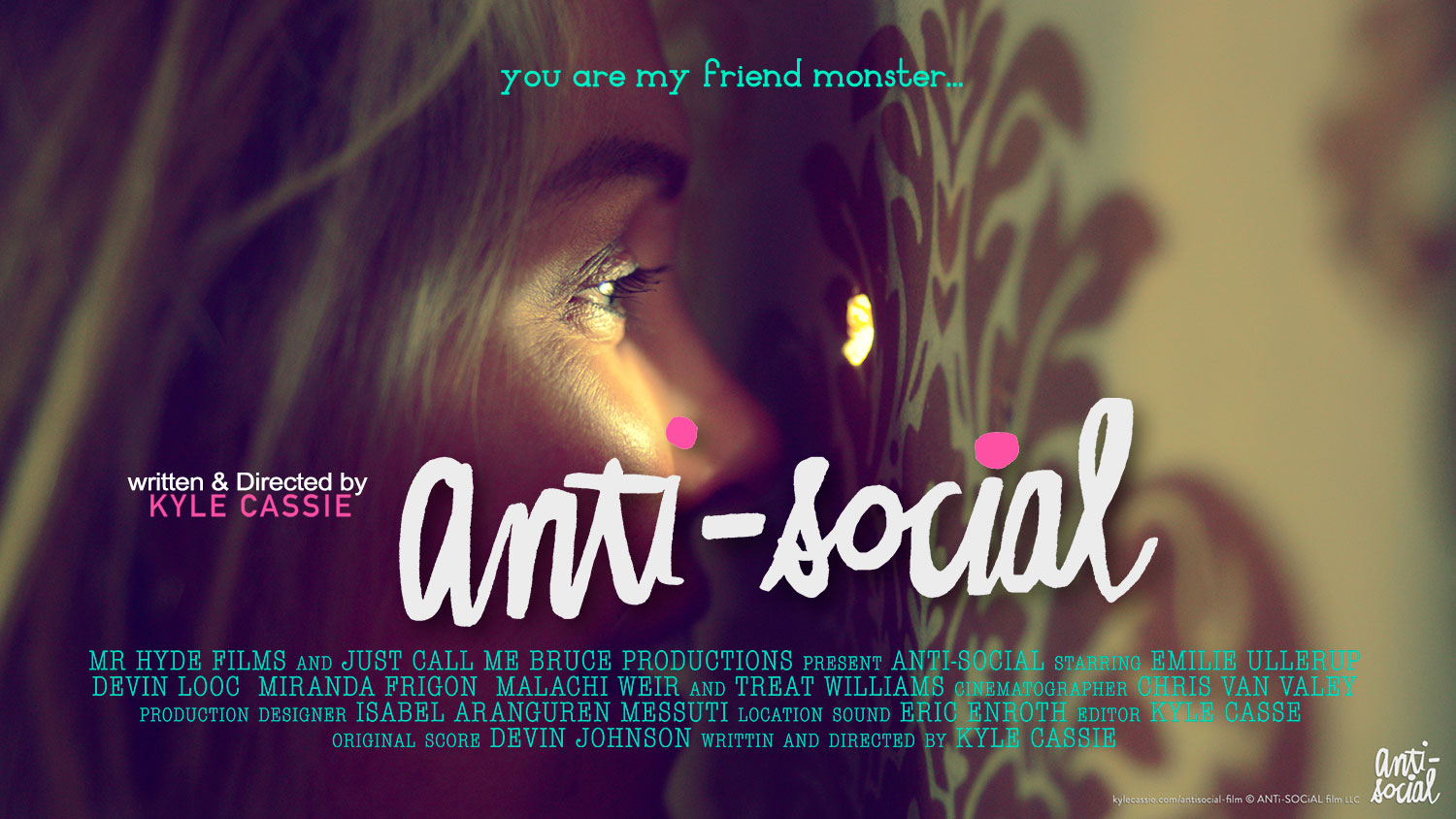
The short sealed her in a room with the monster she built to survive being watched. The feature follows her out, into a world that runs on the same hunger, and asks whether you can ever really leave your friend monster behind.
ANTi-SOCiAL put a fallen entertainer alone in an apartment with Maurice, the sasquatch her mind built for company, and watched loneliness split her in two. Friend Monster is the thing the short was always circling. What a life spent being watched does to a person, and what it grows in the dark once the applause stops.
It is a film about the cost of being seen. The way a crowd can adore you and injure you in the same motion. The way isolation manufactures a companion, and the way that companion learns to feed. Maurice was never the threat. Maurice was the symptom.
And it is a film about right now, a world where everyone performs, everyone is a little bit famous, and almost everyone is quietly building a Maurice of their own. It reaches the fragile first. It reaches the children who are already on stage before they are old enough to say no.
This is a fairy tale that has been left out in the weather. The logic is dream logic. Rooms rearrange. Time folds. The monster is tender one minute and starving the next, and the film never asks you to decide which one is real, because to her they both are.
The register is the one Kyle Cassie has always worked in. The darker side of fairy tales, told through a playful, tormented lens. Comedy that turns without warning. Dread that arrives wearing a warm smile and an offer to help. A world tilted just far enough off true that you stop trusting the floor, and stop being sure the danger is even in the frame.
Maurice is what makes it magical realism instead of horror. He is funny. He is enormous. He is the best friend she has and the worst thing in the room, and the movie loves him and fears him at once. The topsy-turvy is not a style choice laid on top. It is the point. A person coming apart does not experience it as a straight line, and this film refuses to pretend otherwise.
Conceptual. The themes are locked. The story is still finding its shape.
One version: she comes home from the place that was supposed to fix her, back to the apartment, back to Maurice, and tries to build an ordinary life on top of the thing that broke her. The world outside offers a way through. A wellness figure, a program, a following, a chance to turn the worst thing that ever happened to her into content. It looks like the exit. It behaves exactly like Maurice.
Another: Maurice follows her out the door, and no one else can see him, and the film lives inside two realities she has to hold at the same time. Another: the monster changes hands, and by the last act it belongs to a child.
These are directions, not decisions. What holds underneath all of them is the question the short asked and would not answer. What do you owe the monster that kept you alive, and what does it cost to finally set it down.
The story is in early development. The themes are not.
A dark fairy tale about the cost of being watched, and the friend we build when there is no one left to watch us.
The short asked the question.
The feature won't let it go.